The Love Spread
Direct answer
Draw three cards for one relationship: you, them, and the connection itself. Each card’s suit shows the arena a person is loving from; the rank shows the move. A five-card variant adds the friction and the direction. The spread describes the dynamic — it does not report anyone’s feelings.
Relationship questions tangle because three different things get asked as one: what is wrong with me, what is wrong with them, and what is wrong with us. This layout forces them apart — one card each. New to the suit-and-rank vocabulary? Start with how to read playing cards, then come back for the layout.
How does the you–them–connection layout work?
Shuffle with the relationship in mind and deal three cards left to right. You — how you are showing up in this bond right now, not your whole personality. Them — how they are showing up, read the same way. The connection — the thing you build between you, which has its own weather and is often the position that explains the other two. In relationships the suits speak plainly: Hearts cards show up through emotional presence, affection, trust, and the need to feel genuinely connected; Clubs through conversation, shared ideas, mental stimulation, and the stories each person believes; Diamonds through values, generosity, security, desire, and the way love is supported in real life; Spades through commitment, endurance, repair, boundaries, and the willingness to grow through pressure.
What does the five-card variant add?
Two positions after the core three. The friction — where the bond grinds: read its suit as the arena the two of you keep fighting in, whatever you think the fights are about. The direction — where the dynamic leans if nothing changes. Deal them fourth and fifth, and read the friction card’s over-expressed range with special honesty; that is usually where the argument actually lives.
A worked example
Question: “What is actually happening between us?” The draw: the Queen of Hearts for you, the King of Spades for them, the 2 of Hearts for the connection. Read with the same meanings their full pages carry:
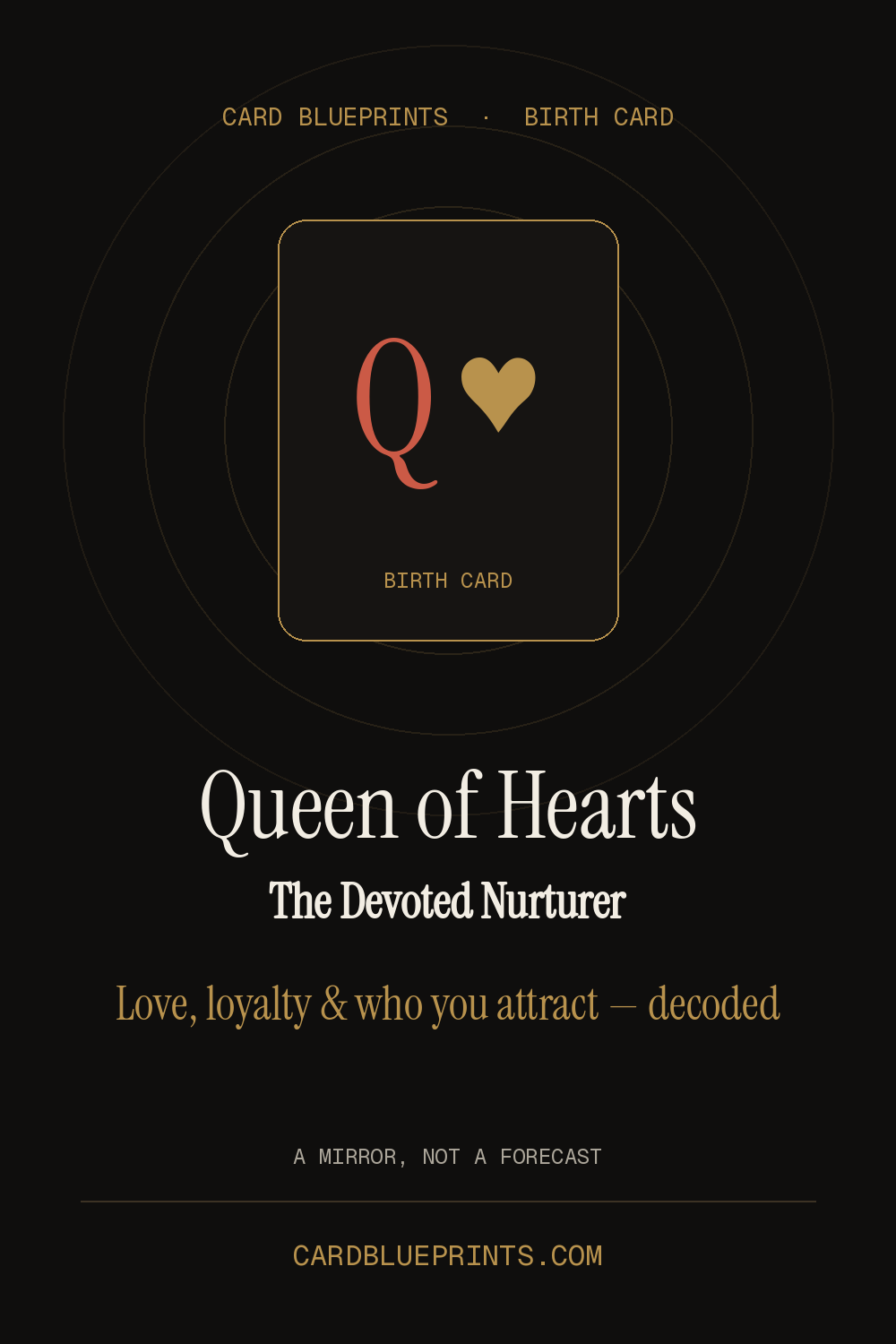
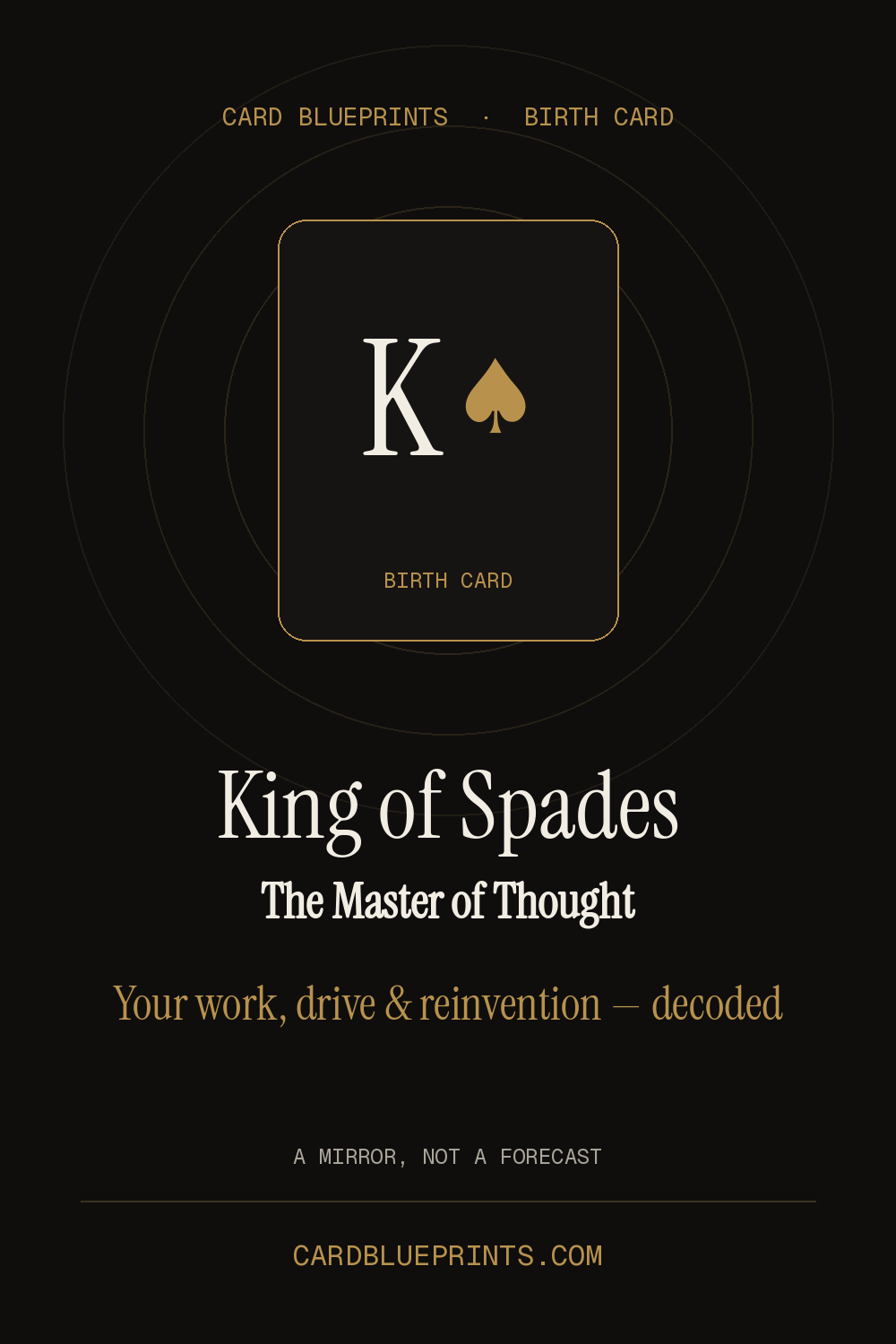
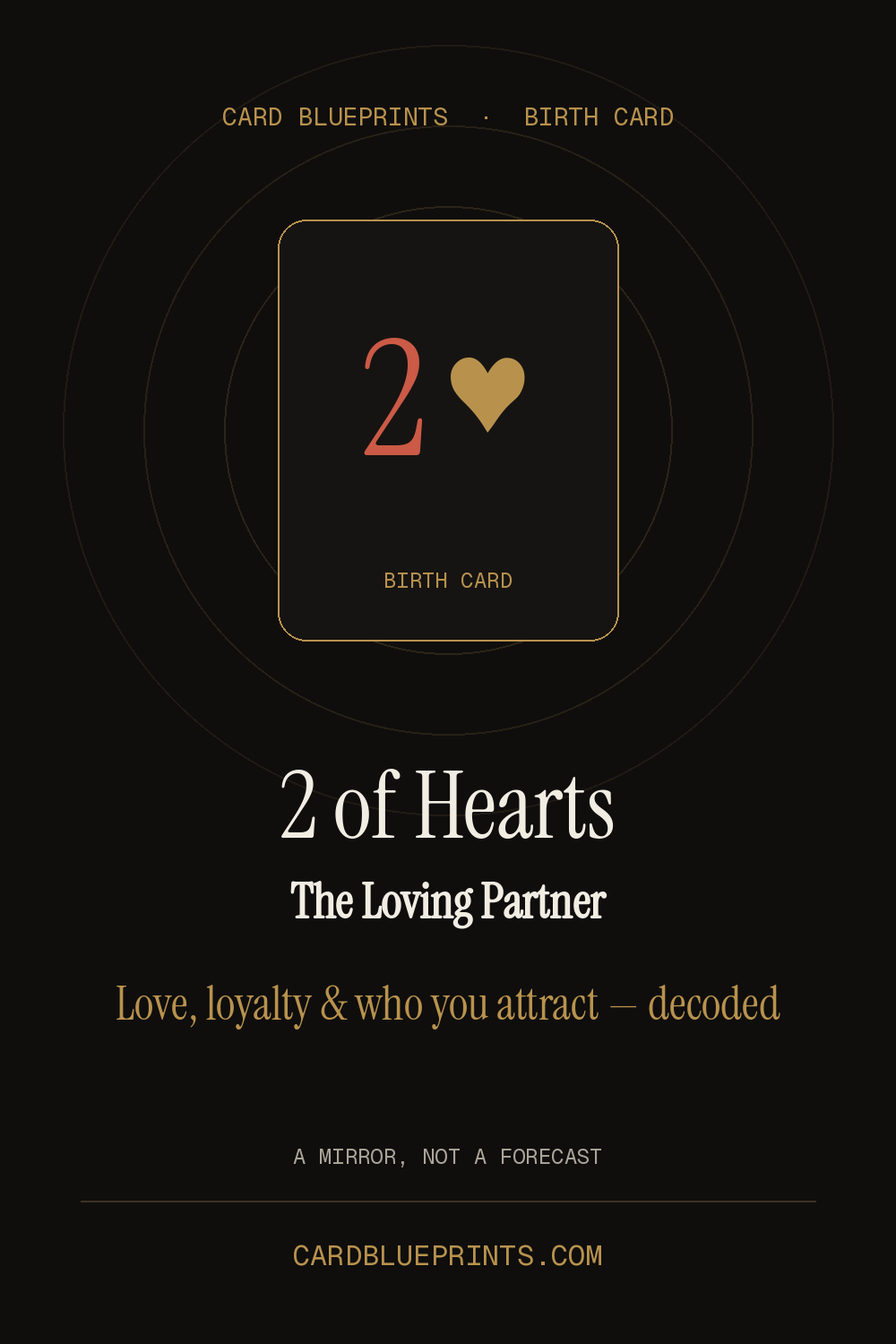
You — Queen of Hearts · The Devoted Nurturer
A Hearts card in the You position: you are loving from the arena of relationships & emotion, with the Queen’s move of inner authority, nurturance, and magnetic intelligence. In balance: You're embodying emotional wisdom, nurturing others through authentic presence and intuitive care. The under-expressed range is the flag — You're emotionally hypervigilant from childhood trauma, reading the room while sacrificing your own needs. Full Queen of Hearts meaning →
Them — King of Spades · The Master of Thought
A Spades card: they are showing up from work, will & transformation, with the King’s move of leadership, command, and mature stewardship. In balance: You're commanding transformation with decisive authority, leading through integrated mastery. Their under-expressed range: You're emotionally withdrawn, using intellect to avoid vulnerability entirely. Full King of Spades meaning →
The connection — 2 of Hearts · The Loving Partner
A Hearts card carrying partnership and exchange: the bond itself is asking for a real two-way exchange in the arena of relationships & emotion. In balance: You're balancing your needs with others' through genuine diplomacy and mutual understanding. Full 2 of Hearts meaning →
Read together: a carer with real emotional authority who may be reading the room at her own expense, a commander who can go quiet rather than vulnerable, and a connection card asking both to trade honestly instead of managing each other. Notice the spread never says who is right — it names the pattern each side is running.
A mirror, not a forecast: the spread describes a dynamic in play, not anyone’s verdict on the relationship. If it clarifies nothing real, discard it.
From the drawn moment to the two actual people
A shuffled love spread reads today’s weather. The deterministic layer underneath reads the climate: each person’s birthday maps to one fixed birth card, and the pairing of those two cards is a standing description of how the two of you tend to mesh — same birthdays, same answer, every time. If the example above were a real couple’s birth cards, their pairing is already written: Queen of Hearts + King of Spades compatibility. For your own relationship, run both birthdays through the compatibility calculator, browse the compatibility pair library — every pairing of the 52 cards has a page — or read how the system scores relationships in the Cardology compatibility guide.
Frequently asked questions
What is the best playing card spread for love?
A three-card layout: one card for you, one for them, one for the connection itself. It works because it separates the two people from the bond between them — most relationship confusion is about which of those three is actually struggling. A five-card variant adds the friction and the direction.
Can playing cards tell you if someone loves you?
No — and this site won't pretend otherwise. Cards are pattern language, not surveillance or prediction: a drawn card cannot report another person's feelings. What a love spread can do is name how each of you tends to love — the suit shows the arena, the rank shows the move — so the real conversation gets clearer.
What is the difference between a love spread and birth card compatibility?
A love spread is shuffled, so it reads the moment and changes with every draw. Birth-card compatibility is deterministic: each person's birthday maps to one fixed card, so the comparison describes the two people's standing patterns and returns the same result every time. Use the spread for today's weather, the birth cards for the climate.
Two birthdays, one answer
Skip the shuffle: compare your birth cards free — the deterministic version of this spread’s question.
Compatibility Calculator →All playing card spreads → · The Three-Card Spread → · The Yes-or-No Reading → · Cardology compatibility →