The Three-Card Spread
Direct answer
Shuffle, draw three cards, lay them left to right, and give each a job: past, present, future — or situation, action, outcome. Read each card as suit (the arena) plus rank (the move), then read the row as one sentence.
Three cards is the smallest layout that tells a story: a beginning, a middle, and a lean. If the vocabulary below is new — suits as arenas, ranks as moves — read how to read playing cards first; this page assumes it and adds the layout.
Which frame: timeline or decision?
Past · Present · Future is the timeline frame. Use it when the question is a situation unfolding — a job, a move, a slow-burning conflict. The positions ask: what fed this, what is true now, where does it lean if nothing changes.
Situation · Action · Outcome is the decision frame. Use it when you hold a choice. The positions ask: what is actually going on, what move is available to you, and what that move tends toward. Same three cards, different jobs — which is why you commit to a frame before the shuffle. Choosing the frame after you see the cards is how wishful readings happen.
How do you read it, step by step?
- Write down one real question, and pick your frame — timeline or decision.
- Shuffle until the question stops feeling urgent in your hands.
- Draw three cards and lay them left to right, face up.
- Read each card alone first: suit names the arena — Hearts for relationships and emotion, Clubs for mind and communication, Diamonds for values and resources, Spades for work, will, and transformation — and rank names the move, Ace through King.
- Check each card’s range. Every meaning on this site is written three ways — balanced, under-expressed, over-expressed — so ask which version you are living. The card’s own page spells all three out.
- Read the row as one sentence, write it down, and test it against the actual week.
A worked example
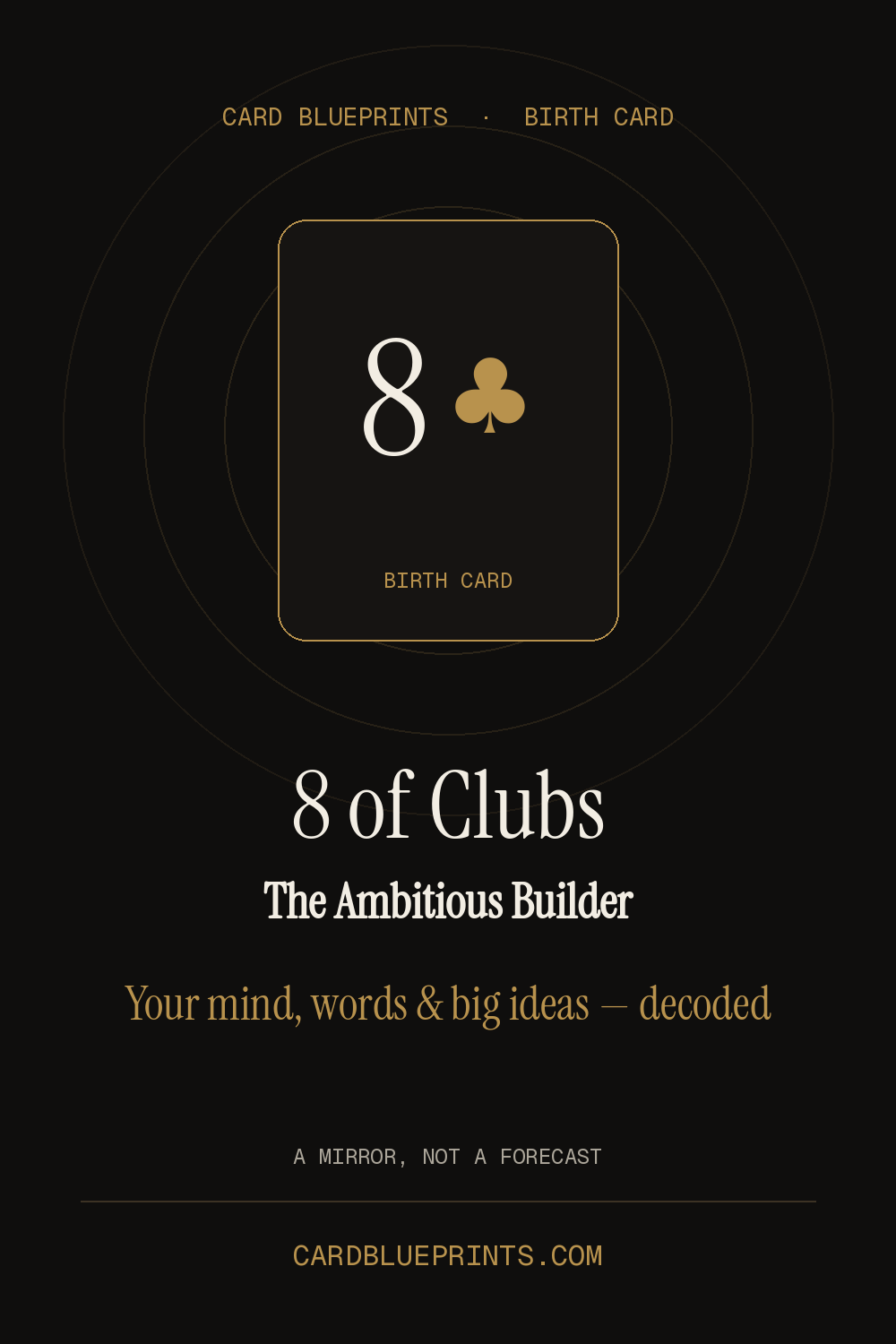
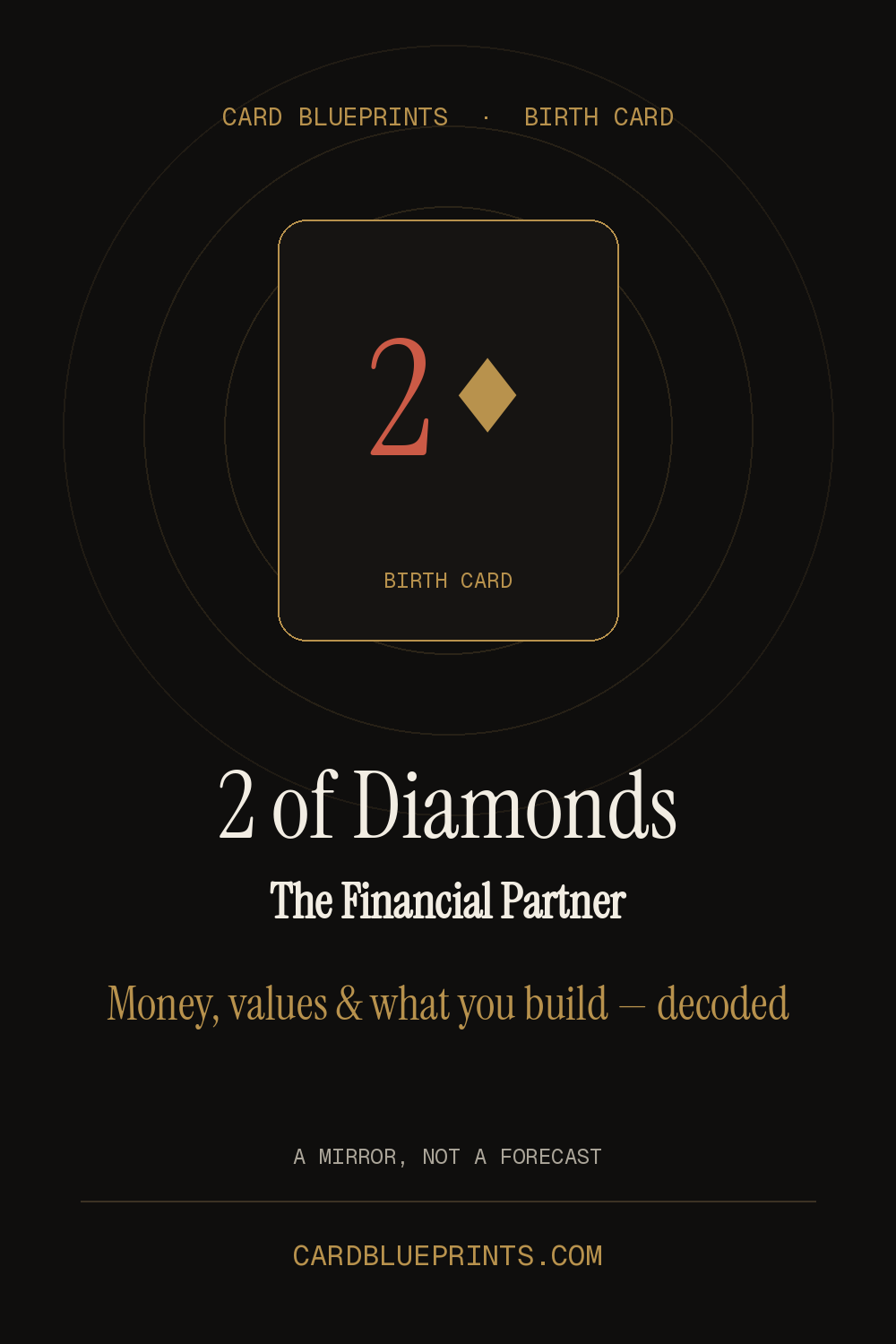
Question: “Where is my work life heading?” — timeline frame. The shuffle gives the 5 of Hearts, the 8 of Clubs, and the 2 of Diamonds. Here is how each card reads, using the same meanings their full pages carry:
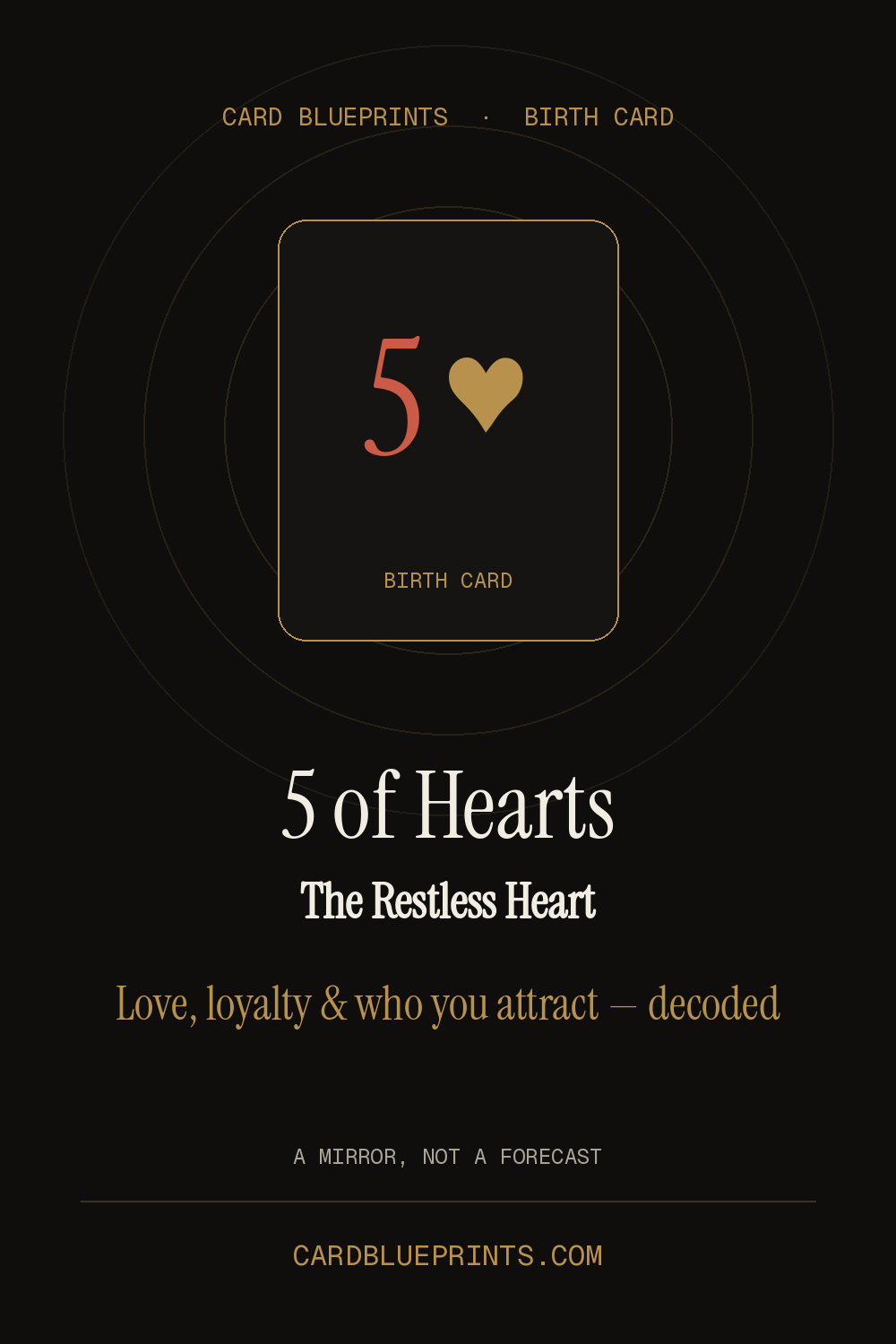
Past — 5 of Hearts · The Restless Heart
A Hearts card, so the chapter behind you ran on relationships & emotion; the rank carries freedom and change. In balance it reads: You're navigating emotional change with adaptability, learning that love deepens through transformation. Restlessness got you here — feelings kept moving. Full 5 of Hearts meaning →
Present — 8 of Clubs · The Ambitious Builder
A Clubs card: the live arena is mind & communication, and the rank carries power, influence, and mastery. In balance: You're commanding knowledge systems with authority, leading through clear thinking. The over-expressed range is the caution — You're intellectually bullying, using mental power to dominate and silence others. That is the edge to watch this month. Full 8 of Clubs meaning →
Future — 2 of Diamonds · The Financial Partner
A Diamonds card, so the lean is toward values & resources, with the rank’s theme of partnership and exchange. In balance: You're creating fair exchanges and mutual benefit through balanced partnership. Full 2 of Diamonds meaning →
Read as one sentence: a restless, feeling-driven chapter is behind you; you hold real mental authority right now, with a warning about how you wield it; and what is forming next is a fair, two-sided exchange around money and value. That is a testable description of a work life — which is all a spread should claim to be.
A mirror, not a forecast: the spread describes a pattern in play, not events on a schedule. Draw again tomorrow and the cards will differ — that is the shuffle’s nature, not a malfunction. If a reading clarifies nothing real, discard it.
Frequently asked questions
What are the positions in a three-card spread?
Past, present, future is the classic timeline frame: where the situation came from, where it stands, where it leans. Situation, action, outcome is the decision frame: what is actually going on, what you could do, what that path tends toward. Pick the frame before you shuffle — choosing it after you see the cards is how wishful readings happen.
Do you read reversed cards in a playing card spread?
You can, but this site's system doesn't use reversals. Every card meaning here is written in three ranges instead — balanced, under-expressed, and over-expressed — which does the work reversals do in tarot: the same card can name the gift, the deficit, or the excess of one pattern.
Can I ask the same question twice?
You can, and you will get different cards — that is what a shuffle is. A drawn spread reads the moment, not the record. If you want an answer that holds still, that is the deterministic side of cartomancy: your birth card is fixed by your birthday and returns the same result every time.
One card that never shuffles
Before you learn spreads, meet the card your birthday already fixed — or call and the AI reader reads it to you free.
All playing card spreads → · The Love Spread → · The Yes-or-No Reading → · How to read playing cards →